Cape Town is a city of elemental drama—Atlantic swells, mountain ramparts, and skies that ignite at dusk. “Crystal Flame Havens” captures that duality: crystalline modernity and fire-warm soul. Across the Atlantic Seaboard, Constantia’s vineyards, and the wild curve of the peninsula, these havens invite you to inhabit the landscape, not just view it. Think frameless glass that dissolves the boundary to sea and sky, stone and timber warmed by evening embers, and curated South African art anchoring every room. Here, sunrise pours down Table Mountain in clean facets of light; by night, fireplaces flicker as the city shimmers beyond your terrace. This is where luxury feels luminous—precise yet deeply human—crafted for slow breakfasts with ocean mist, golden-hour aperitifs, and midnight conversations by the hearth while the lighthouse sweeps the horizon.
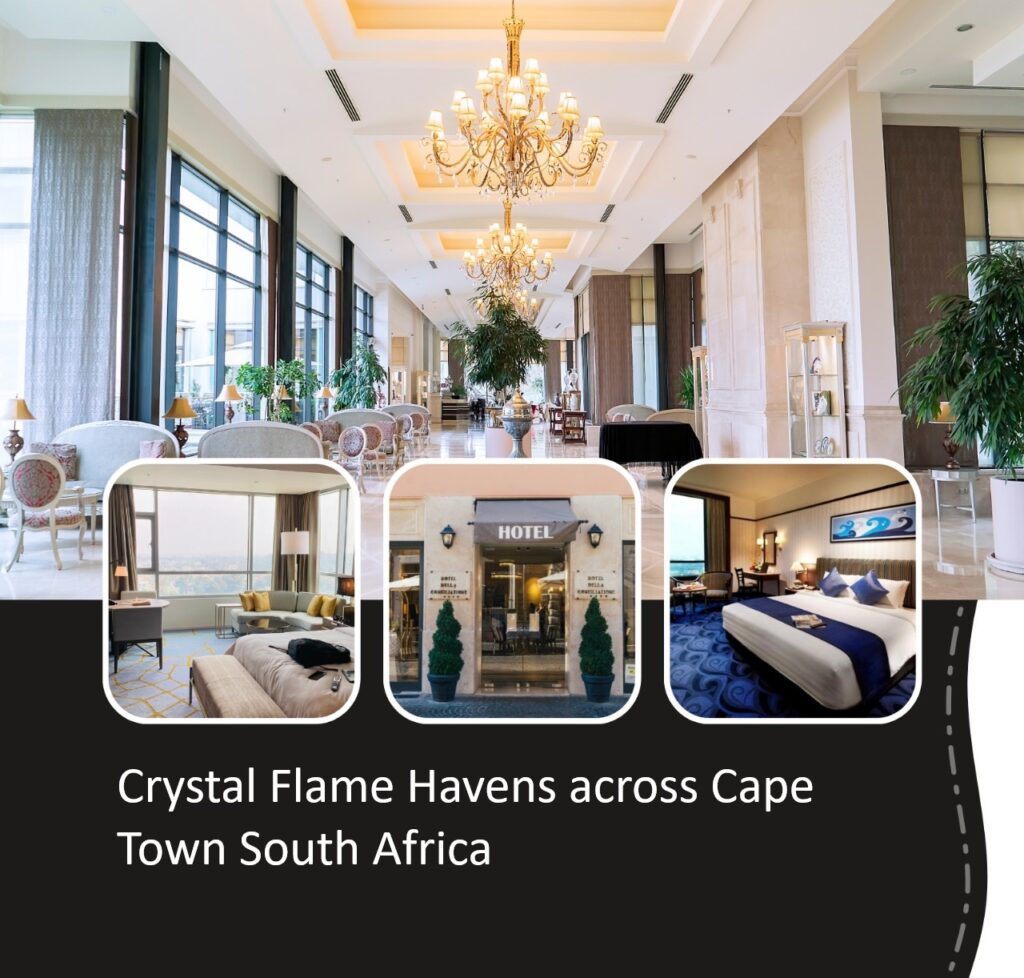
Table Mountain Ember Suites
Perched above the City Bowl, the Ember Suites are designed around the mountain’s living theatre. Mornings begin with pale quartz light sliding across honed slate floors; afternoons drift into a warm glow that sets the granite cliffs alight. Interiors layer Cape textures—Karoo stone, fynbos-tinted linens, and sculptural timber—while intuitive tech vanishes into quiet surfaces. A glass-walled study frames the cableway’s slow ascent; a courtyard braai area turns late lunches into ritual. After dark, a suspended fireplace throws coppery reflections across the room, and the city’s constellations answer back.
Atlantic Quartz Pavilions
On the cliffline between Clifton and Bantry Bay, the Quartz Pavilions face an ocean that changes color by the minute. Retractable glass panels dissolve into sea air; decks hover above boulders, with tide and spray providing the soundtrack. The living room is a single, gallery-like plane—polished concrete underfoot, a statement chaise angled toward the Twelve Apostles, a low shelf of contemporary South African ceramics. Here, the “flame” is culinary: a chef’s island with teppan grill for sunset tastings—West Coast oysters, coal-kissed crayfish, and a citrus-smoked naartjie tart to finish. At night, lanterns glow along the rim pool, rim and horizon becoming one continuous line.
Constantia Firelight Villas
In Constantia, vineyards fold around white-gabled homesteads and oak avenues. The Firelight Villas reinterpret Cape Dutch lines with pared-back grace: limewashed walls, deep verandas, hand-thrown terracotta softening glass and steel. Inside, a tasting room links to a private cellar of cool-climate sauvignon blanc and wooded chardonnay. Evenings stretch long by the hearth: a crackle of bluegum logs, a cheese board of fynbos honey and Klein Karoo figs, conversations that ebb into candlelit quiet. At dawn, you stroll beneath vineyards beaded with dew, returning to a breakfast of rusks and espresso before a private art tour in the city.
Chapman’s Peak Lumen Residences
Carved into the mountainside above Hout Bay, the Lumen Residences are cinematic: long, low volumes of stone that look hewn from the road’s copper cliffs. The pool seems to pour into the ocean; the sauna window frames a postcard of Kommetjie’s lighthouse. Minimalist bedrooms use velvet blackout and acoustic paneling for cloud-soft sleep; wake to a sky aflame—saffron, coral, then a clear topaz blue. A day might arc from helicopter flips over Cape Point to a slow drift through Kalk Bay’s galleries, ending with a private guitarist on the terrace as the last embers fade behind Sentinel Peak.
Q&A + Villa Recommendations
When is the best time to visit for that “crystal flame” light?
Shoulder seasons—September to November and March to May—offer lucid air, mellow crowds, and sunsets that linger. Summer (December–February) brings festive buzz and warmer seas on False Bay; winter delivers whale watching and fireplace romance.
Is Cape Town suitable for families seeking privacy and ease?
Yes. Many villas include enclosed gardens, heated pools, bunk rooms, and on-call concierges who arrange childminders, surf lessons at Muizenberg, penguin visits at Boulders, or gentle Lion’s Head sunrise hikes tailored to all ages.
What experiences pair perfectly with these havens?
Start with a sunrise hike or e-bike up Signal Hill, then a private Constantia tasting with a sommelier. Add a coastal drive over Chapman’s Peak, a chef-led fynbos foraging walk in the Kogelberg, and a sunset cruise off Camps Bay—returning to fireside dining at home.
Which other villas do you recommend across the city?
- Clifton Glasshouse Villa (Atlantic Seaboard): Cliff-hung decks, wave-spray soundtrack, rim pool melting into horizon.
- Bantry Bay Wind-Sculpted Residence: Breezeway courtyards, sheltered from the Cape Doctor, spectacular winter sunsets.
- Constantia Vineyard House: Cape-Dutch-meets-contemporary, tasting room, orchard strolls at dawn.
- Noordhoek Dune Lodge: Wide-angle beach views, wood-burning hot tub, nature reserve trails at your gate.
- City Bowl Art Loft: Panoramic terraces, gallery-grade curation, walkable to Bree Street’s restaurants.
How do services work in a private haven?
A dedicated concierge typically coordinates airport transfers, pantry pre-stocking, daily housekeeping, private chefs, yoga instructors, and security—so every hour flows without friction.
Conclusion
“Crystal Flame Havens across Cape Town South Africa” are not merely stays; they are vantage points on a city sculpted by wind, light, and water. Each haven blends the precision of glass and stone with the intimacy of firelight—quiet luxury that amplifies place rather than overpowering it. From Atlantic-edge pavilions to vineyard-warm villas and mountain-lit residences, you inhabit Cape Town’s most radiant hours: dawn washing the peaks, sunset threading the sea with gold, and night drawing the city into a glittering constellation. The exclusivity here is elemental—space, silence, and the luxury of time, held gently between crystal clarity and a lingering, embered glow.