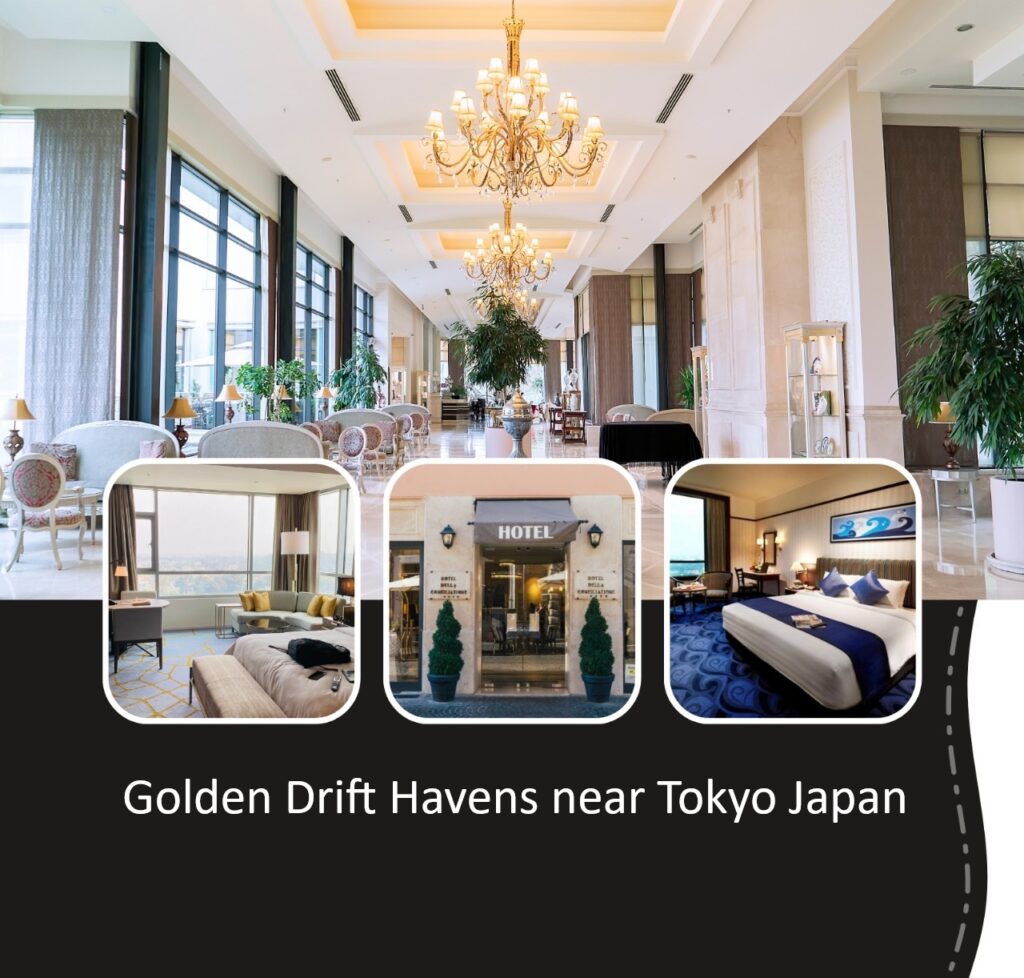
The phrase “Golden Drift Havens” evokes a quiet luxury that glides between citylight brilliance and countryside hush—a curated constellation of private villas within easy reach of Tokyo, where design, gastronomy, and ritual meet. Here, your day might begin with a cedar-scented bath and end with the glow of lanterns across a moss garden. The energy of the capital is always near, but these havens soften the edges: they lean into forests and sea air, into volcanic hot springs and mountain views, into craft and calm. What follows is a portfolio of themed stays—each with its own tone—designed to turn a brief escape into a memory that lingers like gold on the horizon.
1) Forest Glass Villa, Karuizawa
A linear glass pavilion skims above a carpet of larch needles, its blackened-cedar façade punctuated by floor-to-ceiling windows. Mornings are crystalline: barista-level pour-over at the stone island, sun pooling across oak floors, a fox slipping between birch trunks. Evenings lean Nordic-Japanese—kamado rice, Shinshu wine, a crackling wood stove. Cyclists trace the leveled lanes, while nearby cafés serve buckwheat crêpes and cloud-soft chiffon. Return for an onsen-style soaking tub framed by river stones and a dedicated tatami tea corner. Silence is not an absence here but a texture.
2) Mist & Mineral Pavilion, Hakone
This hillside refuge is a private onsen dream: open-air rotenburo pools fed by mineral springs, screens that slide back to reveal ash-blue ridgelines, and a hinoki bath perfuming the suite. The dining counter is chef-ready for kaiseki—local trout, yuzu, mountain vegetables—while an art alcove displays raku ceramics. Between ropeways and museums, your pace becomes unhurried. Steam curls over water at dusk; lanterns bloom; a futon is laid with the precision of a tea ceremony. The world shrinks to warmth, wood, and whispering rain.
3) Azure Edge House, Miura Peninsula
Sea air arrives salted and bright at this cliffline hideaway. Wide terraces step toward the Pacific, perfect for sunrise yoga or late-afternoon sashimi tastings. Interiors balance linen, sisal, and pale ash; sliding doors frame fishing boats like moving paintings. Charter a small yacht for a covey of hidden coves, then grill kinmedai on the deck as gulls mark the wind. Nights are for telescope sessions and a vinyl turntable spinning City Pop. It’s Tokyo’s weekend playground—yet here, the horizon is the only clock you keep.
4) Fuji Ember Retreat, Lake Kawaguchiko
A modern farmhouse in basalt and hemp plaster centers on a sunken irori hearth, where coals glow like small constellations. On clear mornings, Mount Fuji stands impossibly exact beyond the balcony; on cloudy ones, the lake turns silver and meditative. The kitchen is built for craft: copper pans, ceramic donabe, a drawer of foraged spices and miso. In the garden, a cedar sauna faces the water; after heat and snow-cool air, pour matcha under a rough-hewn pergola and read until the light goes blue.
Q&A: Planning Your Golden Drift Escape
What defines the “Golden Drift” experience?
It’s a blend of discreet architecture, tactile materials, and ritualized comfort that lets you move—drift—between stimulation and stillness. Expect private wellness (onsen tubs, saunas), thoughtful kitchens, hyperlocal dining, and views framed as compositions rather than spectacles.
When is the best time to visit?
Spring (late March–April) offers sakura and mild air; early summer brings lush greens without peak heat; autumn (late October–November) adds crimson maples and crisp visibility; winter rewards onsen stays with snow and sharp Fuji views. Each season rewrites the palette without changing the promise of quiet luxury.
How far are these havens from central Tokyo?
Karuizawa is about 70–80 minutes by Shinkansen; Hakone roughly 80–100 minutes via Romancecar or train plus cable car; Miura is ~60–90 minutes by train and taxi; Kawaguchiko runs 100–130 minutes by highway bus or rail. Transfers are simple, and concierge drivers can streamline the last mile.
What other villas do you recommend near Tokyo?
- Kintsugi Atelier Residence, Kamakura: A wabi-sabi coastal home with a lacquer studio session and meditative garden breakfasts.
- River Lantern House, Chichibu: Cedar-beam loft over a clear river, private canoe dock, open-fire sukiyaki dinners.
- Bamboo Whisper Villa, Izu Peninsula: Cliffside bath facing a jade inlet, chef’s omakase spotlighting spiny lobster and citrus.
- Moss Courtyard Machiya, Kawagoe: Edo-era townhouse modernized with radiant floors, courtyard maples, and artisan sweets workshops.
What services elevate the stay from great to unforgettable?
A private chef who sources morning fish from local ports; a tea master leading a twilight ceremony; in-villa shiatsu after a day of rambling trails; curated vinyl and incense menus; and seamless bag transfers so you travel weightless between city and countryside.
Conclusion: Where Light Turns to Gold
“Golden Drift Havens near Tokyo Japan” is less a single address than a way of traveling—selecting homes that soften time, celebrate craft, and keep the city within reach while letting the spirit exhale. In these villas, ordinary hours acquire a patina: steam over mineral water, the hush of cedar at dusk, the brushstroke of Fuji at dawn. You come for proximity to Tokyo; you leave remembering how easily the day can turn to gold when comfort, nature, and design move in quiet accord.