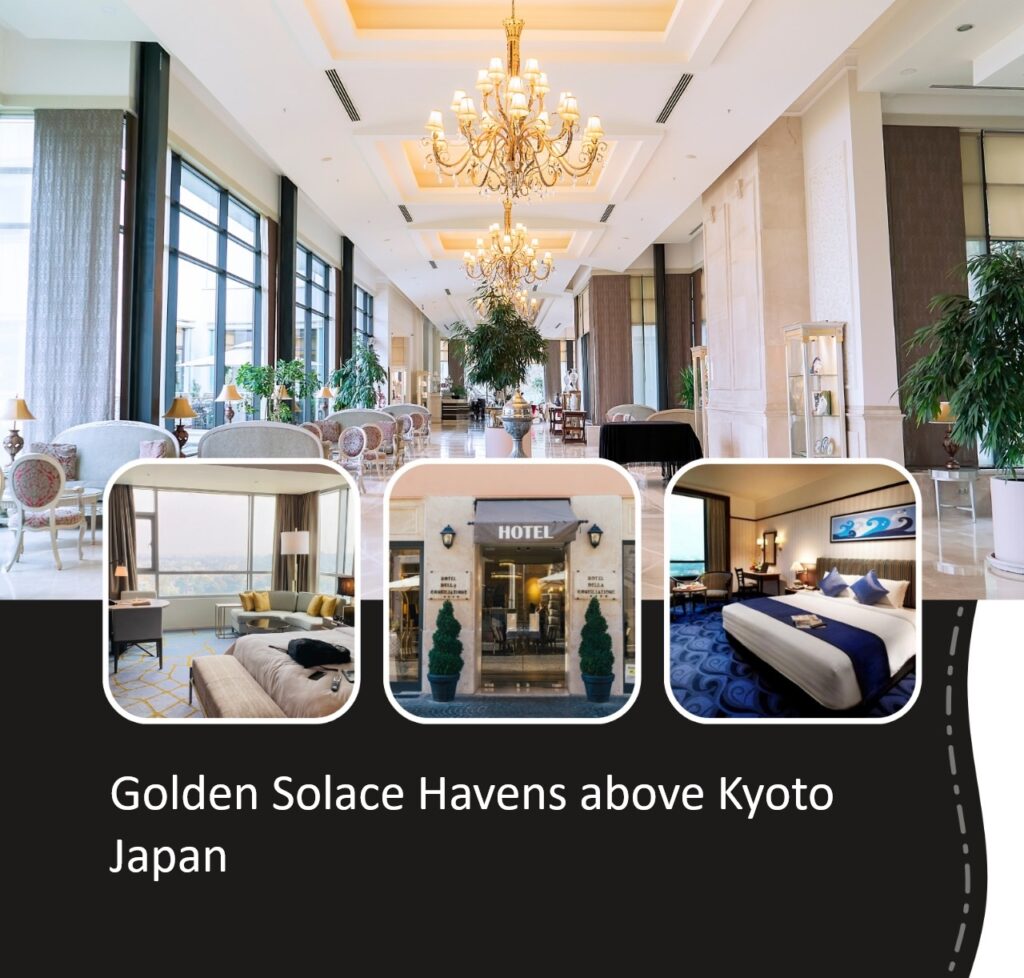
Kyoto is a city that glows softly at sunrise and burns gently at sunset. “Golden Solace Havens” captures that luminous hush: a curated series of private residences perched just above temple roofs and bamboo canopies, where warm light pours across tatami, hinoki steam curls from deep soaking tubs, and the day slows to the pulse of a tea whisk. Here, you wake to cranes of pale mist unrolling over tiled eaves and close the evening with lanterns flickering against paper screens. Each haven is imagined not as mere accommodation but as a ritual—quiet, meticulous, and beautifully framed—so that every gesture, from sliding a shoji to stepping onto an engawa balcony, feels like a ceremony of calm. Below, Kyoto hums—Gion’s cobbles, Arashiyama’s groves, Higashiyama’s pagodas—yet up here you inhabit a rare, golden stillness.
The Havens
Kinkaku Reflection Sanctuary
Inspired by the shimmering aura around the famed Golden Pavilion’s mirror-lake—without trespassing on it—this sanctuary leans into radiance rather than opulence. Morning light finds its way through slender latticework and lands on woven tatami, turning the room into a hushed canvas of straw-gold and shadow. A cedar-scented hinoki ofuro anchors the bath suite, framed by a pocket garden of moss and black river stones. The tea niche, with hand-thrown cups and a modest tokonoma, invites you to linger through the sound of water trickling from a bamboo spout. Step outside at dusk and you’ll watch Kyoto’s rooftops slip from copper to ink as temple bells mark the hour.
Arashiyama Canopy Refuge
Stretching above the Katsura River and the bamboo sea, this refuge feels suspended between leaf and cloud. The engawa runs the length of the living room, a wooden ribbon where you can sit cross-legged to taste crisp air and distant pine. Interiors follow a pale, tactile palette—unvarnished oak, rice paper, wool—so the view becomes the artwork. Wake to the sigh of the grove, then follow a private path down to the river’s edge for a slow breakfast bento. Evenings call for a robe, a floor cushion, and a book; the only soundtrack is wind through bamboo and the faint murmur of oars.
Gion Lantern Courtyard
This machiya-inspired haven arranges rooms around an inner courtyard that glows like amber come nightfall. Lanterns hang low over stepping stones; camellias soften the geometry. Inside, sliding shoji reveal layered spaces: a reading alcove for quiet letters, a low dining table for kaiseki-style courses, and a compact tatami salon for tea. Textiles—silk cushions, sashiko throws—carry motifs borrowed from maiko kimono, and the fragrance of roasted hojicha drifts from a clay teapot. When you wander down into Gion, the world grows theatrical; when you return, the courtyard dims to a private stage set for silence.
Higashiyama Moon Terrace
Above terraced lanes and weathered pagodas, this haven frames the moon like a painting. A roof deck—shielded yet open—holds a stone tub warmed to onsen-style comfort. Steam rises into night air as the city’s constellation blinks below. Inside, the bedroom sets linen against lacquer, feather against paper, making a gentle contrast that soothes after temple walks. In the small listening room, a vintage amp feeds soft jazz or shakuhachi; in the pantry, ceramics and sake cups await nightcaps. Dawn lays a gold ribbon on the floor; midnight tucks it away.
Q&A + Villa Recommendations
When is the best time to stay?
Mid-March to mid-April brings plum and cherry blossoms, while late October to mid-November sets the hills ablaze with maple red and gingko gold. Early mornings in these windows are especially luminous.
Are the havens suitable for families?
Yes—opt for layouts with two or more bedrooms and enclosed courtyards. Many homes can arrange futons for children and provide safety gates upon request.
How private are these stays?
Expect discreet, keyless entry; interior courtyards, screens, and sound-softening materials maintain a serene, secluded atmosphere even close to popular districts.
How do I get around?
Kyoto’s taxis are efficient for short hops between districts. Pair them with gentle walks and, when practical, the subway between Karasuma and Tozai lines. Ask hosts about luggage forwarding to keep temple days light.
Other Kyoto-area villas to consider?
- Bamboo Crest Villa, Arashiyama — River-facing deck, tatami salon, and a petite tea garden.
- Moon Garden Residence, Higashiyama — Rooftop soaking tub with pagoda views; minimalist, meditative interiors.
- Lantern Row Machiya, Gion — Restored townhouse with lantern-lit courtyard and calligrapher’s nook.
- Maple Ridge Pavilion, Kitayama — Quiet hillside setting, floor-to-ceiling windows, and a cedar sauna.
(Availability and exact features vary; verify amenities and licenses before booking.)
Conclusion: The Gold You Keep
“Golden Solace Havens above Kyoto Japan” is less a place than a pace—an edited life where texture, light, and small rituals carry the day. You’ll collect golden hours the way others collect souvenirs: the glow of a courtyard lantern, the hush of bamboo at dawn, the warmth of hinoki steam on your skin. In a city devoted to craft and ceremony, these havens give you room to be both guest and practitioner of calm. Step down to the streets whenever you wish; step back up to serenity when you’re done. The rarest luxury isn’t what you bring home—it’s what you learn to leave out, until what remains is quietly, perfectly, gold.