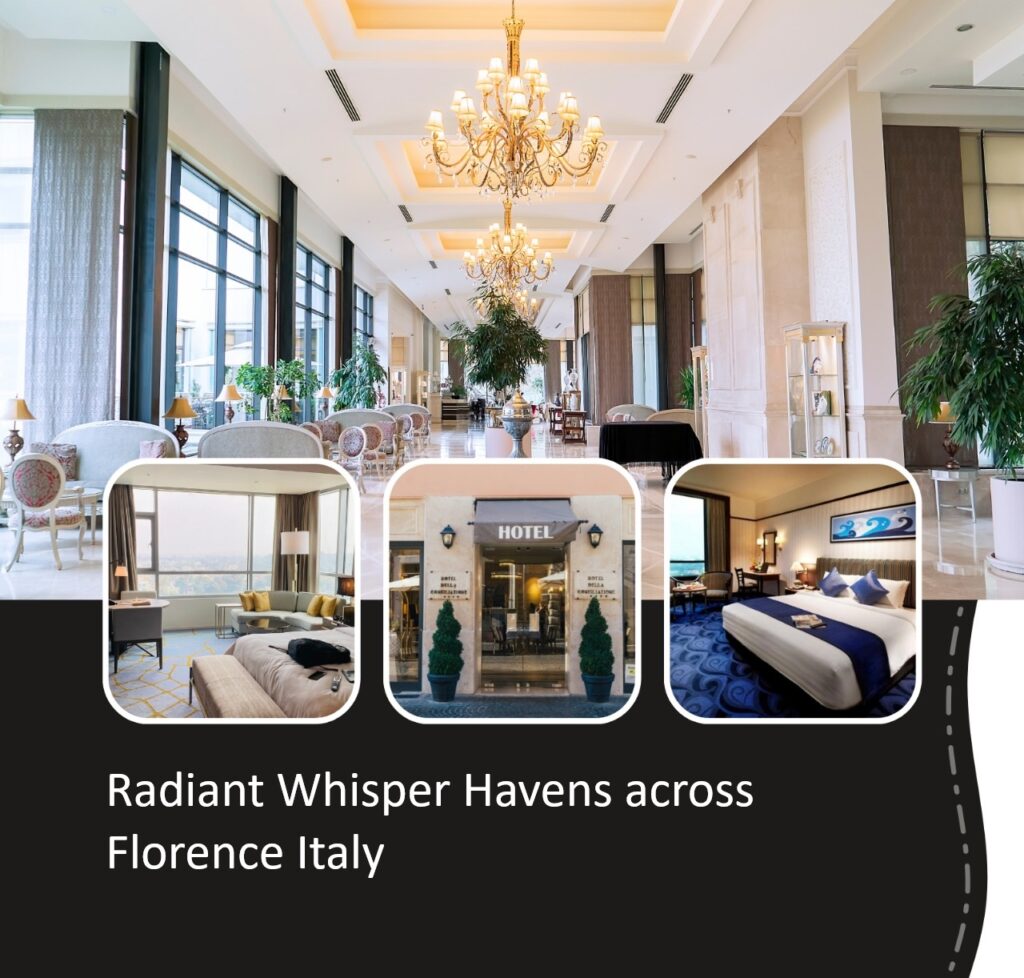
Florence doesn’t shout; it shimmers. “Radiant Whisper Havens across Florence Italy” evokes the quiet, luminous side of the Renaissance city—where morning light slides over terracotta rooftops, where church bells lace the air like silver thread, and where private courtyards hold the day’s warmth long after sunset. This collection of themed hideaways imagines Florence as a series of intimate stages: each one setting its own mood, each one tuned to a different traveler’s rhythm. Together, they promise a rare kind of luxury—the hush between heartbeats when a place feels made for you alone.
The Arno Luminaria Loft
Above the river’s slow curve, this loft frames Florence in watercolor: pale dawns, peachy afternoons, and indigo evenings dotted with lantern boats and bridge lights. Inside, rafters are left raw, linen is stone-washed, and glass doors glide open to a slim balcony where espresso tastes brighter. Mornings begin with the soft whirl of cyclists on Lungarno paths; afternoons drift by as sculls cut the water in clean strokes. A private chef can lay out a tasting of Tuscan olive oils at sunset, while, down below, the city murmurs like a distant aria.
Medici Garden Pavilion
Set behind ivy-draped walls, this garden pavilion feels like a small secret kept from centuries. Tuscan pietra serena lines the entry, citrus trees perfume the courtyard, and a bronze fountain murmurs over mosaic stone. Interiors pair velvet settees with hand-painted panels—heritage with a light hand. A conservatory breakfast starts the morning beneath glass and greenery; later, a masseuse arrives with botanical oils distilled from local herbs. By evening, you’re dining al fresco, candlelight catching the rims of Brunello glasses, while fireflies make a quiet galaxy in the hedges.
Oltrarno Artisan Atelier
Across the river in the bohemian Oltrarno, this atelier celebrates Florentine craft. A bookcase hides a doorway to a tiny goldsmith’s bench; leather tools hang in neat rows; a marble slab waits for rolling fresh pasta. Each room showcases a different discipline—paper marbling, scagliola, carved wood—curated pieces you can touch and, if you wish, learn. The host arranges private studio visits with neighborhood artisans, ending in a twilight passeggiata to Santo Spirito for cicchetti and wine. It’s a haven for hands-on souls who want to bring home more than a souvenir: a skill, a story, a spark.
Fiesole Sky Terrace
A short ascent above the city, Fiesole offers the gift of perspective. On this panoramic terrace, Florence lies like a painted tray—Duomo, Palazzo Vecchio, the silver line of the Arno—while cypresses spear the horizon. Mornings come with hillside birdsong and yogic sun salutations; afternoons unfold by the plunge pool; night reveals constellations you forgot you knew. Interiors are pared-back and calm: lime-washed walls, linen drapes, a fireplace for cooler months. A driver whisks you down for galleries and gelato, then back up to watch the city glow like embers from a safe, silken distance.
Santa Croce Candlelit Library
Steps from the basilica, this townhouse layers hush on hush. The library is the heart: leather-bound spines, a rolling ladder, a reading lamp that casts honeyed light on maps of Tuscany. Afternoon tea arrives on a silver tray—almond biscotti, bergamot steam—then an art historian guides a private chapel tour after hours. Evenings settle in with Vivaldi on vinyl and a tray of truffled pecorino. Here, time slows to page-turns and whispered plans for tomorrow.
Q&A: Planning Your Stay & Villa Picks
When is the best time to visit?
Spring (March–May) and early autumn (September–October) offer mild weather, harvest flavors, and softer crowds. August can be hot, while winter brings festive markets, lower rates, and crisp museum days.
Which neighborhoods suit which travelers?
Centro Storico is for first-timers who want to walk everywhere. Oltrarno suits creatives and food lovers. Fiesole appeals to privacy seekers who like city access without city pace.
What amenities should a luxury villa in Florence include?
Look for quiet outdoor space (terrace or courtyard), soundproofed bedrooms, proper A/C, a well-equipped kitchen, and concierge support for museum tickets, chauffeurs, and in-villa dining.
Family or multigenerational trip tips?
Choose multi-suite layouts, a ground-floor bedroom, and proximity to parks (like the Boboli Gardens). Ask for child-safe pool setups and simple, kid-friendly menus from private chefs.
Art lover’s essentials?
Stay within a short walk or chauffeured hop to the Uffizi, Accademia, and Santa Maria Novella. Request after-hours gallery entries, artisan workshops, and rooftop aperitivi timed to golden hour.
Other villa and villa-style hotel recommendations near Florence?
- Il Salviatino (Fiesole): Grand-villa romance with hillside views and refined service.
- Belmond Villa San Michele (Fiesole): A former monastery with frescoed charm and sweeping terraces.
- Villa La Massa (Candeli): Riverside elegance, spacious grounds, and a serene country feel close to town.
- Villa Cora (near Boboli Gardens): Opulent interiors, historic flair, and a resort-style pool.
- Castello di Casole (Tuscany countryside): For those extending beyond Florence into rolling-hill escapism.
Conclusion: The Quiet Privilege of Florence
“Radiant Whisper Havens across Florence Italy” is less about square footage and more about a frequency—spaces tuned to the city’s gentle register. Whether you’re tracing reflections along the Arno, breathing citrus under a pavilion canopy, learning a craft in Oltrarno, watching the skyline from Fiesole, or turning pages by candlelight near Santa Croce, each haven gives you something rare: the sense that Florence is leaning in to tell you a secret. That is the city’s most exclusive experience—not louder, not larger, simply closer.