The phrase “Sapphire Tide Havens beside Tokyo” evokes a world where the Pacific’s deep blues meet the city’s neon geometry. Here, the horizon is a living line—sleek trains gliding past pine-framed beaches, izakaya lanterns glowing as surfers rinse boards at dusk, and villas that hold the sea like a secret. Just outside Tokyo, coastal pockets from Hayama to Kamakura, Atami, and the Kujukuri coast promise modern sanctuaries with tatami calm, glassy lines, and private onsen steam. What follows is a quartet of signature experiences—each a distinct mood—designed for travelers who want the energy of Tokyo by day and the hush of the ocean by night.
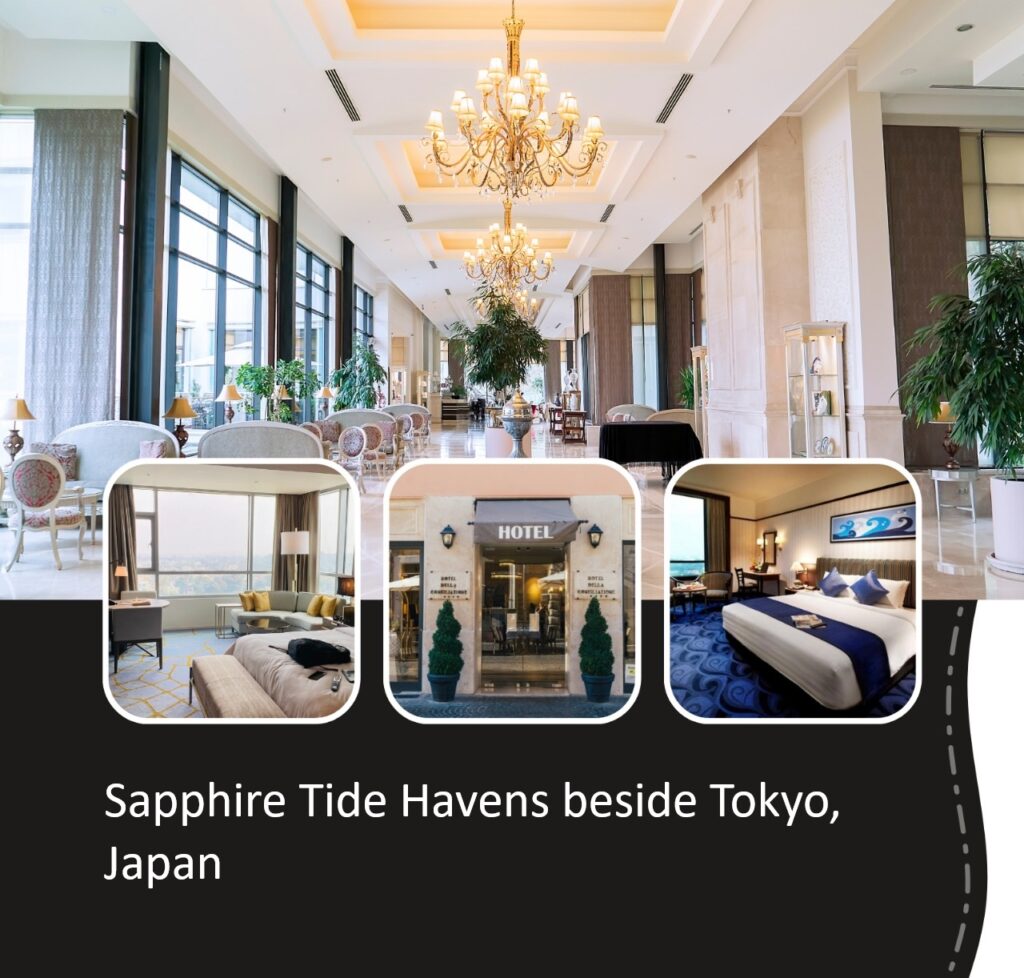
Azure Bay Pavilion — Hayama’s Blue Hour Modernism
A contemporary pavilion set a few steps from Isshiki Beach, this haven frames the sea through floor-to-ceiling panes and cedar screens. Mornings begin with pour-over coffee on a wind-sheltered deck; afternoons drift into slow lunches of shirasu don and crisp tempura at a neighborhood spot; sunsets bruise the water violet. Interiors balance pale oak with linen and stone; shoji-inspired pocket doors keep spaces fluid. A discreet concierge stocks seasonal sashimi and hinoki bath salts, while paddleboards and beach cruisers await the first sign of fair weather. When the sky turns cobalt, the house seems to float.
Lantern Loft — Kamakura’s Cliffside Calm
Carved into a cliff near Yuigahama, this loft pairs mid-century silhouettes with heritage accents—rush-woven zabuton, indigo textiles, a single tokonoma niche for seasonal ikebana. Sliding glass opens to a slim terrace suspended over the surf, ideal for sunrise yoga and late-night tea stirred by ocean wind. Days unwind through temple walks (Hasedera’s hydrangeas in season), picture-book alleys, and slow bakery pilgrimages. Evenings call for a private chef’s kaiseki, plated on matte ceramics: yuzu-bright sashimi, charcoal-kissed ayu, and silky chawanmushi. In the hush after dinner, the tide is the only clock.
Onsen Courtyard — Atami’s Hillside Steam
High above Sagami Bay, this villa folds around a stone courtyard with a natural hot-spring bath. Step from tatami to warm mineral water as clouds drift and fishermen’s lamps prickle the horizon. The architecture is quietly dramatic: blackened timber, soft washi, a skylit engawa that blurs inside and out. A sommelier curates Koshu whites and silky sake; a masseuse arrives with camellia oil and a blanket of heat. Between soaks, take a funicular down to seafood shokudo counters, then return for star-watching with a wool throw and a bowl of matcha.
Shoreline Minimal — Kujukuri’s Sand-Line Serenity
On Chiba’s endless ribbon of beach, this glass-and-concrete hideout celebrates negative space. There’s an elemental rhythm here—wind, sand, surf—mirrored by low furniture, hidden storage, and a chef’s island for omakase at home. Surfboards lean like sculpture; a projector drops silent films across a white wall; a small fire pit turns cool nights into conversation. Mornings invite a run on hard-packed sand; afternoons, a drive to farm stands for strawberries and clams; evenings, nothing but constellations and a tide that never hurries.
Q&A: Planning Your Sapphire Tide Escape
Q: How far are these havens from central Tokyo?
A: Hayama and Kamakura are typically 60–90 minutes by train and car combined. Atami is around 45–60 minutes by shinkansen from Tokyo Station, plus a short transfer. Kujukuri varies by location but averages 90–120 minutes by car.
Q: What’s the best season for a coastal stay near Tokyo?
A: Late spring (April–June) and early autumn (September–October) balance mild weather with fewer crowds. Winter is crisp and clear—excellent for views and onsen. Summer brings lively beaches and warm water; book early.
Q: Can these villas accommodate families or small groups?
A: Absolutely. Many coastal properties offer 2–4 bedrooms, flexible tatami spaces for futons, and safe, shallow beach entries. Ask for baby amenities, beach toys, and board games in advance.
Q: Are private chefs or in-villa dining options available?
A: Yes. Concierge teams can arrange kaiseki, sushi omakase, or casual seafood grills. Pair with local sake, Koshu wine, or Japanese craft beer. Dietary preferences are typically accommodated with notice.
Q: What unique experiences pair well with these stays?
A: Sunrise surfing lessons in Kamakura, cycling the Hayama shoreline, a pottery workshop in Mashiko (day-trip), tea ceremony immersion, or a guided temple garden walk. In Atami, schedule a private onsen etiquette mini-lesson.
Q: Any other villa areas near Tokyo to consider?
A:
- Zushi & Hayama: Low-key beaches, marina sunsets, easy dining.
- Kamakura Hills: Temple views, walkable cafés, cozy terraces.
- Atami & Izusan: Ocean-view onsen, dramatic night skies.
- Izu Peninsula (Ito, Shimoda): Turquoise coves, coastal hiking, hot springs.
- Chiba’s South Coast (Tateyama, Minamiboso): Warmer microclimate, flower fields, quiet bays.
Conclusion: Where the City Ends and the Sea Begins
Sapphire Tide Havens beside Tokyo capture a rare balance—plugged into Japan’s most dynamic city yet attuned to elements that never rush: wind, wave, and light. Whether you favor a glassy bay pavilion, a lantern-lit cliff loft, an onsen courtyard in the hills, or a minimalist shoreline refuge, each stay delivers its own signature: privacy, design intelligence, and a sense of time that lengthens with every tide. Come for the convenience, stay for the hush, and leave with a memory of Tokyo reframed—still electric, but edged in blue.