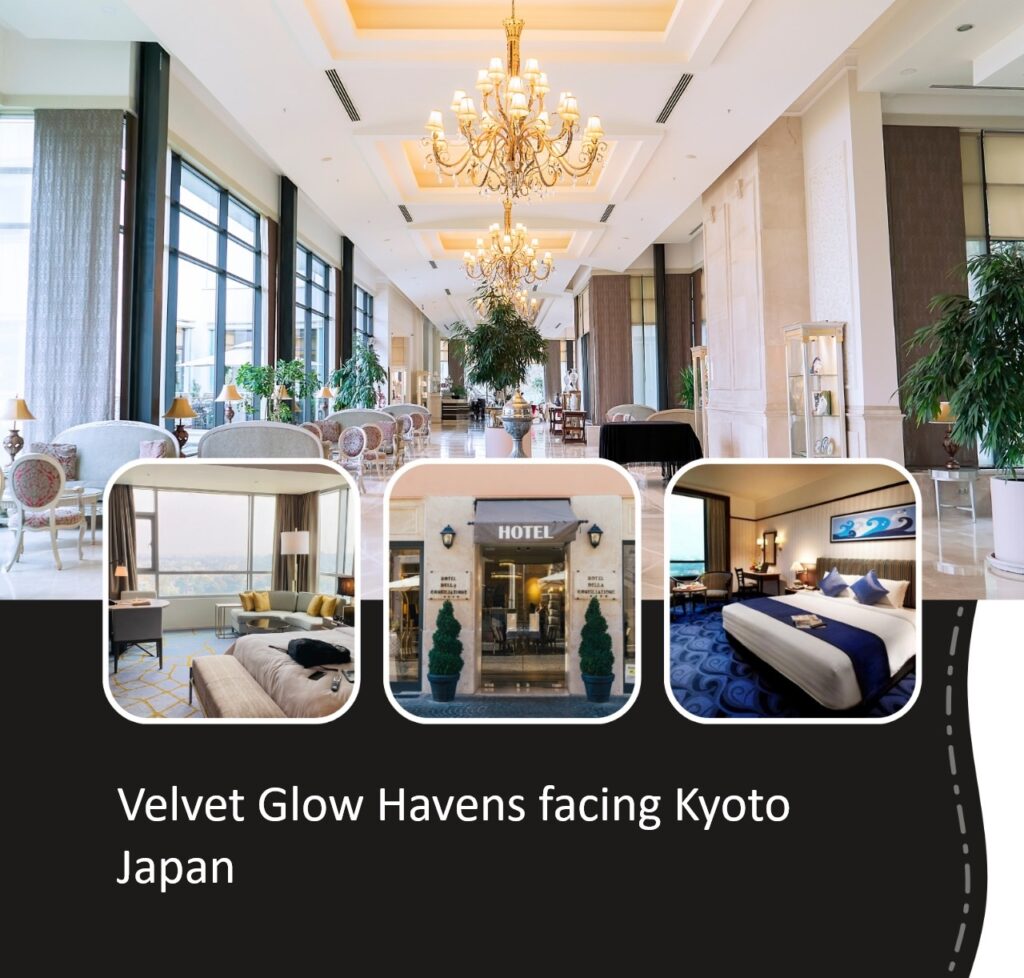
Kyoto has a way of softening time. “Velvet Glow Havens facing Kyoto Japan” captures that sensation in stays that look toward pagoda-studded skylines, rippling rivers, and tea-green hills. Each haven is curated for a particular mood—dawn light folding across temple eaves, moonlit moss gardens, or the hush that follows a tea whisk’s final swirl. What unites them is an intimacy with place: textures that echo tatami and silk, palettes lifted from maple leaves and indigo dye, and quiet luxuries that let Kyoto’s spirit do the talking.
1) Silk Lantern Outlook
Perched above the tiled roofs of Higashiyama, Silk Lantern Outlook glows at blue hour, when lanterns along alleyways begin to flutter. Sliding cedar screens open to an L-shaped terrace where you can sip gyokuro while watching the city change from copper to violet. Inside, a low platform bed faces a picture window framing Yasaka Pagoda; beneath, radiant floor heating warms bare feet after evening strolls in Gion. The aesthetic is spare but sensual—hand-loomed runners, washi sconces, and a hinoki soaking tub whose citrusy steam wraps around you like a shawl.
2) Maple Whisper Pavilion
A short drive from Tofuku-ji’s famous bridge, Maple Whisper Pavilion is an ode to autumn. The suite is arranged around a private courtyard garden planted with momiji, its leaves casting shifting lacework across a stone basin. Interiors lean into earth tones—persimmon, chestnut, burnished gold—while a discreet sound system layers shakuhachi over the trickle of a tsukubai. Come dusk, a private chef prepares kaiseki with peak-season ingredients: matsutake brushed with soy, sweet potato glazed to mirror shine, and a final course of matcha served beside a brazier’s patient glow.
3) Moon-Tea Garden Suite
Minimalist and meditative, Moon-Tea Garden Suite sits along a ridge that catches the first slice of moonrise. The star is a circular “moon window” cut through a wall of clay plaster, framing pines like a living scroll. A tearoom annex holds everything for a focused chanoyu: chawan with faint iron speckling, bamboo scoop, and linen fukusa. Technology recedes—hidden speakers, invisible AC—so that the mind can settle. After a bath in the deep stone ofuro, slip into a yukata and pad out to the raked gravel; even the night air seems brushed and combed.
4) Kamo Riverside Panorama
Where the Kamo River widens and cranes idle in the shallows, this haven opens nearly wall-to-wall to water and sky. Mornings begin with cyclists zipping past willow shadows; evenings end with the whisper of reeds. A long tatami salon transitions to a contemporary kitchen for open-fire breakfasts: charcoal-kissed onigiri, grilled ayu, and miso with yuzu. For couples, a two-seat balcony bench invites shared quiet. For creatives, a built-in writing ledge faces north light—perfect for postcards, sketches, or the outline of your next beginning.
5) Zen-Glass Hillside Villa
Above Arashiyama’s bamboo, Zen-Glass floats among camellias and moss. Entire walls pivot open, inviting wind to move like water through the space. The palette is near-monastic—ink, sand, cloud—with moments of drama: a single bronze bell, a charcoal calligraphy stroke, a slab table of rippled sugi. The spa sequence runs like a poem: sauna, mist shower, cold plunge, then silence on a tatami chaise. When the Sagano Romantic Train whistles somewhere below, it feels like a memory approaching, then passing, then gently folding itself away.
Q&A: Planning Your Kyoto Glow
Q: What’s the best season for these havens?
A: Each holds a different magic—spring for petals drifting past temple roofs, summer for river breezes and evening festivals, autumn for fiery maples, and winter for the hush of snow over moss gardens. Choose the mood you want to bottle.
Q: Are these stays suitable for quiet work or creative retreats?
A: Yes. Most havens include dedicated writing nooks, stable fiber internet hidden out of sight, and lighting calibrated for long, gentle focus. Expect daylight that flatters paper and mind.
Q: Which neighborhoods pair serenity with quick access to culture?
A: Higashiyama and Gion place you near iconic shrines yet steps from intimate eateries. Arashiyama offers nature and bamboo trailheads. Along the Kamo, you’ll feel the city breathe without losing convenience.
Q: Any etiquette tips for blending in?
A: Slip shoes off at the genkan, keep voices soft on balconies, and time baths before 10 p.m. If a tearoom is provided, treat the implements as you would a library’s rare book—slow hands, clean intent.
Q: What other villas match this atmosphere?
A: Consider Higashiyama Lantern Villa (rooftop tub above tiled roofs), Arashiyama Bamboo Estate (private path into the groves), Gion Silk Residence (artisan textiles and pagoda views), and Kifune Riverstone Retreat (summer terrace over cold, clear water). Each extends the same quiet-luxury thread in a different weave.
Conclusion: The Quiet Privilege of a Perfect View
“Velvet Glow Havens facing Kyoto Japan” is less a set of rooms than a set of perspectives—on rivers unhurried, on gardens that teach patience, on food that tastes like weather and soil. The exclusivity here isn’t about a locked gate; it’s about a protected atmosphere where the city’s oldest rituals feel freshly handwritten for you. Wake to temple bells you can’t quite place, watch the sky take its slow bow, and let the day organize itself around light, steam, cedar, and silence. In these havens, Kyoto doesn’t perform—she confides. And you, for a rare and luminous spell, are part of the whisper.