Tokyo is a city that never stops unfolding—lantern-lit alleys yielding to neon horizons, tranquil shrines tucked behind glass towers, and seasons that paint the skyline in blush and gold. “Velvet Bloom Havens” captures that dual charm: soft, textural comfort wrapped around the city’s sharp modern edges. Imagine plush, sound-cushioned sanctuaries with ikebana compositions on low walnut tables, balcony frames catching the glow of Shibuya and the calm of the Sumida. These havens don’t just place you in Tokyo; they stage Tokyo as your living artwork—morning light drifting over tatami, evening cocktails glimmering against a grid of constellations, and every moment curated for privacy, poise, and presence.
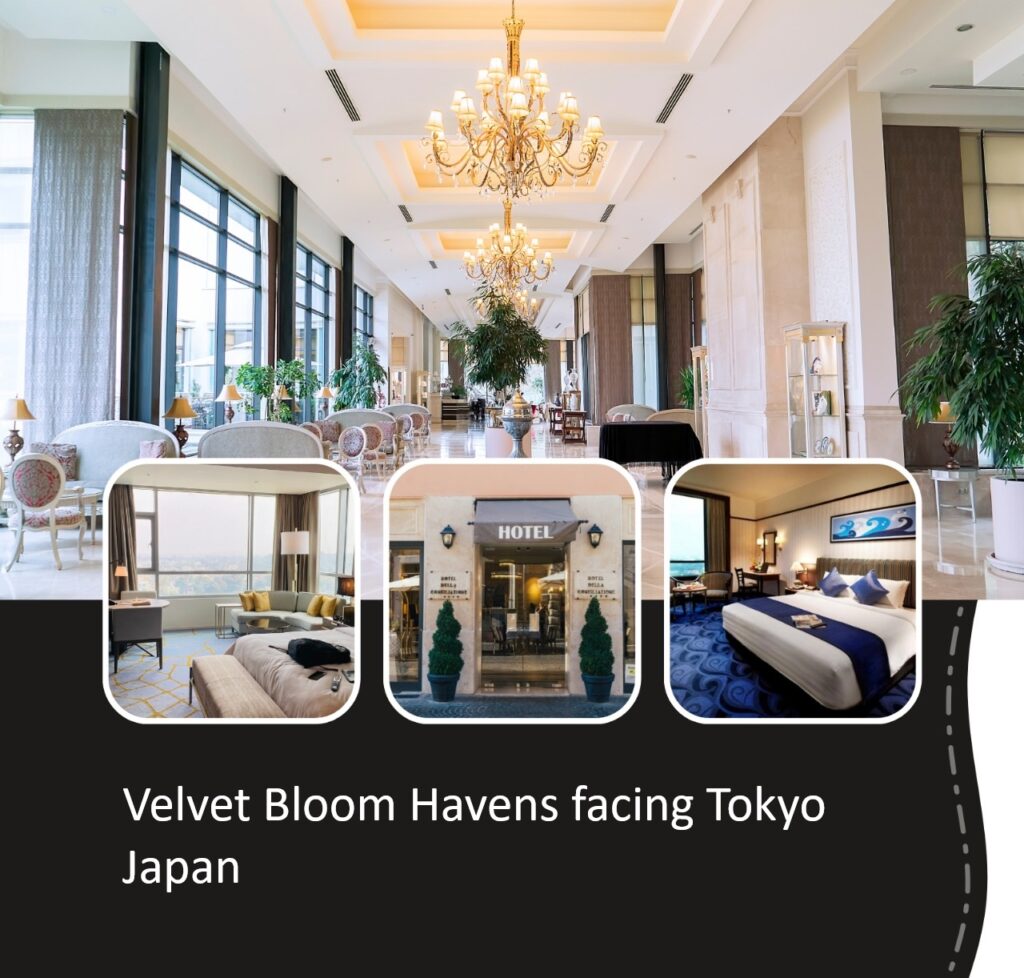
Theme I — Skyline Petals
Think penthouse-level serenity where the metropolis performs for you through floor-to-ceiling glass. Here, the “petals” are layers of comfort: velvet daybeds, silk cushions, and a soft acoustic hush that lets Tokyo’s spectacle remain purely visual. A curated mini library nods to local architects—Tange, Ando, Kuma—so your eye for the city’s lines grows sharper as the sun sets and the towers flicker on. A discreet butler preps matcha and seasonal wagashi, then leaves you to savor it on a balcony warmed by a subtle terrace heater. It’s metropolitan theater—no queue, no crowd—just you, the skyline, and the silent punctuation of the stars.
Theme II — Neon Kimono Evenings
This mood leans into Tokyo’s nocturne: lacquered trays, dimmed amber lamps, and low-tempo city jazz. After a ramen run in Ebisu or a speakeasy hop in Ginza, you return to a room staged like a modern tea house—linen throws, a hinoki bench, and a freestanding tub set near a window where the city’s neon reads like calligraphy. The minibar trades ordinary snacks for yuzushu, black sesame truffles, and artisan senbei. A scent program layers yuzu-hinoki at turndown, so the room drifts between brightness and woodsy calm—urban energy filtered through ritual.
Theme III — Zen Courtyard Mornings
When daylight breaks, the haven pivots to stillness. A pocket garden brings moss, stone, and a single maple into conversation with light. Breakfast is kaiseki-simple: tamagoyaki, grilled fish, miso, pickles—plated like small architecture. The bath ritual follows—soaking, cooling, stretching—before a short meditation led by audio guidance in both English and Japanese. The idea is gentle structure: a morning that edits away rush and leaves only what matters. You step into the city aligned—ready for galleries in Roppongi, ateliers in Omotesandō, or a serendipitous kissaten discovered down a quiet lane.
Theme IV — Harborlight Soaks
For guests drawn to wind and water, some havens angle toward Tokyo Bay. Here, the palette cools to soft grays and indigo, with binoculars set by the window to follow ferries across the water. An outdoor cypress tub holds heat even in a sea breeze, and a compact grill can be arranged for sunset yakitori with a private chef. The soundtrack is minimalist: water, wind, and the distant, comforting machinery of a working port.
Q&A — Planning Your Stay
What makes “Velvet Bloom Havens” different in Tokyo?
It’s the balance of sensory plush and purposeful restraint. You get tactile comfort—velvet, hinoki, and linen—without visual clutter, plus curated rituals (matcha, bath, breathwork) that knit each day to the city’s rhythm.
Which neighborhoods best match each theme?
Skyline Petals suits Roppongi or Toranomon for dramatic vistas. Neon Kimono Evenings pairs with Shibuya, Ginza, or Akasaka for late-night dining. Zen Courtyard Mornings feels at home in Yanaka or Kagurazaka’s quieter streets. Harborlight Soaks aligns with Toyosu or Odaiba, where water and sky expand the frame.
Is this better for couples, families, or business travelers?
All three—couples relish the privacy rituals; families appreciate sound-softened rooms and separate nooks; business travelers benefit from ergonomic work alcoves, reliable espresso kits, and blackout systems that actually work.
When is the best time to visit?
Late March–early April offers sakura views; October–November brings crisp air and amber ginkgo. Summer is electric (festivals, fireworks) if you prefer high energy; winter is quiet, clear, and perfect for long soaks.
Any villa or ryokan-style recommendations near Tokyo for a similar feel?
- HOSHINOYA Tokyo (Otemachi) — A contemporary urban ryokan with tatami rooms and a top-floor hot spring; refined, ritual-forward privacy.
- TRUNK(HOUSE), Kagurazaka — A single-key townhouse with art-driven interiors; intimate, design-centric, and deeply local.
- FUFU Hakone — Villa-style suites with private hot springs amid cedar and mist; an easy escape by train.
- Hoshinoya Fuji (Kawaguchiko) — Minimalist cabins terraced above the lake; outdoor living refined, with distant Fuji on clear days.
- FUFU Kawaguchiko — Lakeside suites with private onsen and uninterrupted Fuji frames; a plush mountain retreat within reach of Tokyo.
Conclusion — The Exclusive Promise
“Velvet Bloom Havens facing Tokyo Japan” is an invitation to hold the city close without letting it crowd your senses. You get the wonder—skylines, lanterns, seasons—edited through quiet luxury: perfect light, exacting service, and rooms tuned like instruments. The experience is exclusive not because it is loud about it, but because it is precise—of place, of texture, of time. Here, Tokyo isn’t just outside your window; it’s paced to your pulse, framed to your liking, and remembered the way the best nights in this city always are—clear, warm, and yours.