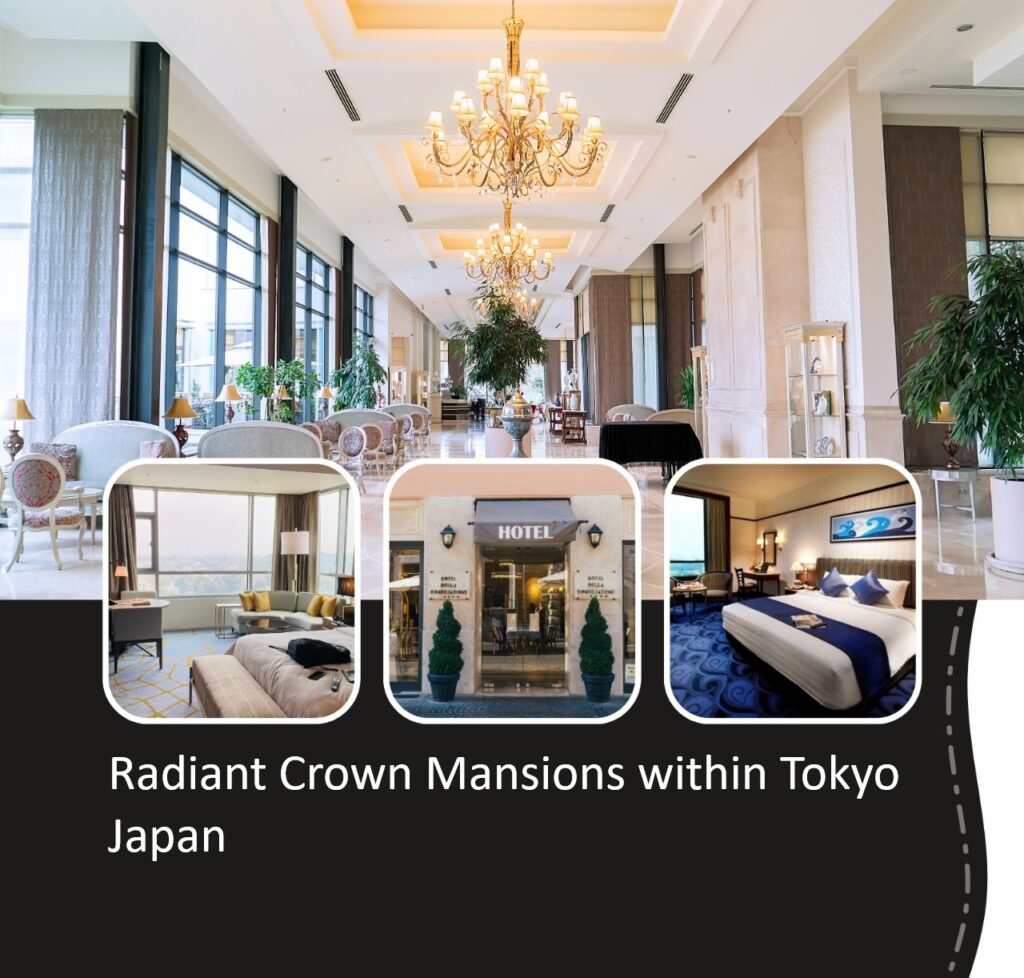
Tokyo dazzles like a jeweled diadem—facets of glass, steel, cedar, and light—so “Radiant Crown Mansions” becomes more than a phrase; it’s a way of inhabiting the city. Imagine suites that float above Shinjuku’s skyline where neon melts into sunrise, tatami-scented sanctuaries tucked behind noren curtains in Nihonbashi, and terrace salons that overlook temple roofs and gingko-lined boulevards. In this world, luxury is not loud; it’s measured in silence between city beats, the weight of a hand-thrown cup of hōjicha, the hush of an in-room onsen, and the glow of lanterns that guide you home after midnight ramen. These mansions are crafted for travelers who want Tokyo’s thrum at arm’s length—and its soul within reach.
Crown of Glass: Skyline Sanctuaries in Shibuya & Shinjuku
High above the crossing, penthouse residences read as observatories to the city’s constellations: train lines tracing light, billboards flickering in chromatic tempo, Fuji’s silhouette on crystalline mornings. Interiors blend limestone with pale maple, modular screens with shadow-line lighting, creating an atmosphere that shifts from cinematic to contemplative with a touch of the dimmer. Private bars host small-batch Japanese gin; floor-to-ceiling windows frame storms rolling over the metropolis like ink on washi. Evening rituals begin with a hinoki soak, then chef’s-choice yakitori plated on stoneware. Up here, time expands—Moments feel collectible.
Lantern Quiet: Contemporary Ryokan Grace in Nihonbashi
Slip through a narrow lane and you’ll find a mansion shaped by ryokan sensibilities: tatami underfoot, shoji breathing soft daylight, alcoves dressed with seasonal ikebana. A tea atelier anchors the living space, where gyokuro is whisked with formal grace, while a hidden soaking tub steeped in cedar oil restores tired city legs. The architecture is minimal, but never austere; textures do the talking—rough plaster, charred sugi cladding, silk-thread runners. Breakfast arrives as a kaiseki story: simmered vegetables, tamago layered like pages, rice that gleams. Step outside and the old merchant quarter whispers its archives through lacquered shopfronts and papered windows.
Riverlight Pavilions: Sumida & Asakusa Views
On the river bend, terraces catch the late-gold sun as water taxis comb the surface into ribbons. These mansions are pavilions in spirit: sliding walls that dissolve interior and terrace; a dining platform set for tempura, sake, laughter. The palette is riverine—cool grays, indigo throws, the occasional splash of vermilion. From here, Tokyo Skytree stands like a tuning fork for the sky, and temple bells drift in on breezes scented with roasted sweet potatoes. Evenings are for lantern-lit storytelling, calligraphy kits laid out beside vintage art books, and a final toast as the last boat glides past like a brushstroke.
Neon Zen Lofts: Ginza’s Gilded Craft
Ginza polishes the idea of luxury to a mirror sheen. Inside these loft-like mansions, you’ll find gallery-white walls offset by painstaking craft: kumiko lattice panels, hammered copper basins, leather stitched with saddle-level precision. A concierge curates micro-itineraries—tailor appointments, artisan perfumers, a counter seat at an eight-person sushi den—while a private playlist of vinyl city jazz spins at dusk. The effect is a dialogue between velocity and stillness: step onto the balcony to watch taxis braid the avenue; step back inside to hear only the turntable’s quiet hiss.
Q&A: Planning Your Radiant Crown Stay
When is the best time to visit Tokyo for this kind of stay?
Spring (late March–April) for cherry blossoms and soft light, or autumn (late October–November) for crisp skies and amber foliage. Both seasons flatter high-rise views and terrace living.
Which neighborhoods suit different moods?
For cinematic skyline drama, choose Shinjuku or Shibuya. For heritage textures and tea culture, Nihonbashi or Asakusa. For couture shopping and gallery-hopping, Ginza. For river breezes and relaxed promenades, Sumida.
Are there family-friendly mansion options?
Yes—look for multi-bedroom layouts with sliding partitions, kitchenettes for late-night snacks, and terraces safely screened. Many hosts can arrange babysitting, kid-friendly dining, and stroller-friendly routes.
Can I have authentic wellness rituals at home?
Request in-room onsen-style hinoki tubs, aroma therapy with yuzu or sakura oils, and private shiatsu sessions. Morning meditation on tatami with a tea master sets a restorative rhythm before the city awakens.
How do I balance privacy with access?
Select properties near major lines (Ginza, Hanzōmon, Ōedo) but on quieter side streets. Door-to-door airport transfers and luggage forwarding mean you slip from plane to penthouse with minimal friction.
Which other villa-style suites or luxury stays should I consider in Tokyo?
Shortlist these for elevated service and craft-driven spaces: Hoshinoya Tokyo (modern ryokan spirit), Aman Tokyo (serene, high-altitude minimalism), Four Seasons Hotel Tokyo at Otemachi (polished city views), Bulgari Hotel Tokyo (contemporary glamour), The Ritz-Carlton, Tokyo (club-level indulgence), and Andaz Tokyo Toranomon Hills (creative, design-forward suites). Each offers the privacy, polish, and sense of occasion akin to a “mansion in the sky.”
What experiences pair well with a mansion stay?
Sunrise sushi at a ten-seat counter, a private ceramics workshop in Yanaka, twilight river cruising under lit bridges, and a bespoke fragrance session in Ginza—returning each time to your sanctuary above the city.
Conclusion: Your Private Diadem Over the City
“Radiant Crown Mansions within Tokyo Japan” promises more than premium square footage; it delivers a choreography of light, texture, and ritual that reframes how you meet the metropolis. From skyline sanctuaries to lantern-quiet ryokan suites, every space is calibrated for rare privacy without losing the electricity of place. Wake to misted horizons; end with river-lantern shimmer. Between those bookends lies a day composed of craft, cuisine, and calm—an exclusive experience that feels, at last, like wearing Tokyo not as a visitor, but as the crown itself.