Nestled in the heart of Italy’s most poetic countryside, Tuscany’s vineyard villas are a living canvas of sunlight, scent, and serenity. Among the golden hills, these villas reveal a rare architectural wonder—olive ceilings and stone paths—a fusion of nature and design that transforms traditional Tuscan hospitality into a deeply sensory experience. Here, every detail, from the flicker of vineyard light on textured walls to the earthy aroma of olivewood beams, celebrates Tuscany’s timeless romance with the land.
The Whisper of Olive Ceilings
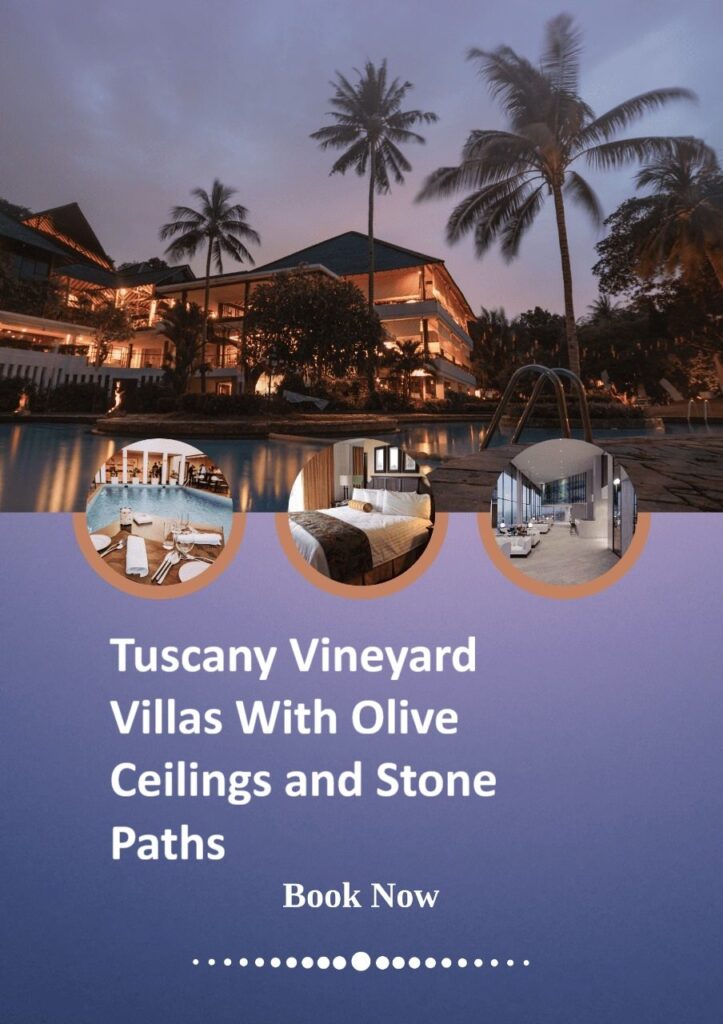
In these villas, ceilings are more than structure—they are storytelling. Made from the aged wood of local olive trees, they exude warmth and rustic elegance, infusing each room with a golden-green glow when the sun filters through tall arched windows. The olive beams are not just decorative; they carry the scent of centuries-old groves, a reminder of the hills that cradle Tuscany’s most treasured fruit.
Each villa interprets this concept differently. Some use polished olive planks to create minimalist, modern interiors that still hum with tradition. Others embrace the natural, imperfect grains, allowing light and shadow to dance between the beams. As evening falls, candlelight reflects softly on the wood, creating a cozy, honeyed glow that evokes the feeling of living inside an ancient painting.
The Charm of Stone Paths
Outside, the experience deepens. Stone paths, hand-laid with the patience and precision of generations, wind through vineyards and gardens of rosemary, lavender, and cypress. These paths tell the story of Tuscany’s earth—sun-warmed by day, cool and grounding by night. Walking barefoot along them is an intimate way to feel the land’s pulse.
Some villas use local travertine, others granite or limestone, each reflecting different hues—amber, ivory, or terracotta. The paths often lead to infinity pools overlooking vine-covered hills or to quiet pergolas shaded by olive trees. At dawn, mist rises from the valleys; by dusk, the stones radiate the memory of sunlight. Every step along these pathways feels like a slow meditation.
Living Among Vineyards
The vineyard is not merely a backdrop—it is the heartbeat of these villas. Guests are often invited to taste estate-produced wines, stroll among ripening grapes, or join small harvest gatherings where laughter, song, and Chianti flow freely. The architecture harmonizes with this rhythm: floor-to-ceiling glass walls open toward rolling vineyards, and outdoor terraces become natural extensions of indoor living spaces.
Inside, rustic luxury defines the aesthetic: terracotta floors, carved oak furniture, and handwoven linen curtains. Some villas incorporate open-air kitchens where guests can cook with local chefs using olive oil pressed just meters away. The fusion of simplicity and sophistication turns daily rituals—breakfast under the vines, a nap by the fountain—into profound pleasures.
A Dialogue Between Earth and Elegance
What makes these villas truly exceptional is the balance between nature’s rawness and human artistry. The olive ceilings connect the guest to centuries of Tuscan craftsmanship, while the stone paths ground them in the soil that has produced some of the world’s greatest wines. There is poetry in this contrast: refinement born from ruggedness, beauty rooted in imperfection.
Every corner is curated for contemplation—a bench facing the sunset, a pool that mirrors the stars, a window framing distant hilltop towns like Montepulciano or San Gimignano. Staying here is not just an escape; it’s an immersion in Tuscany’s eternal dialogue between art, landscape, and life.
Q&A: Villa Highlights and Alternatives
Q: Which villas best showcase olive ceilings and vineyard charm?
A: Villa Poggio al Vento near Siena is renowned for its olivewood interiors and panoramic vineyard terraces. Casa dell’Oliveto near Montepulciano uses reclaimed olive beams and has an outdoor kitchen surrounded by vines. For a modern twist, Tenuta di San Michele blends minimalist design with a private wine cellar carved into stone.
Q: Are there similar villas in other regions of Italy?
A: Yes. In Umbria, La Pietra Bianca offers a comparable aesthetic, combining stone architecture with olive-grove surroundings. Meanwhile, Villa Serena in Chianti merges vineyard living with spa-style amenities.
Q: What’s the best time to visit?
A: Late September to early October, during harvest season, when the vineyards are alive with color and celebration. The weather is mild, and local festivals add to the charm.
Q: Can guests participate in wine or olive oil production?
A: Many villas offer immersive experiences—pressing olives, blending wines, or attending candlelit tastings led by vintners. It’s a perfect way to live Tuscany’s traditions, not just observe them.
Conclusion: The Soul of Tuscany, Reimagined
To stay in a Tuscany Vineyard Villa with Olive Ceilings and Stone Paths is to experience harmony in its purest form—where architecture breathes with the rhythm of the land. These villas blur the boundary between nature and luxury, offering not just accommodation, but communion. Under olivewood beams and along ancient stone paths, guests rediscover what it means to feel grounded, inspired, and profoundly alive.
It’s more than a stay—it’s Tuscany whispering its secrets through wood, stone, and vine.